Mindfulness meditation can change your brain in ways that support healthier, more successful relationships. But how can you meditate when your brain is so busy? Marsha Lucas, PhD is a psychologist / neuropsychologist who explains why the busier your brain is, the more opportunities you have to do the "reps" in meditation that re-wire your brain.
February 3, 2011


January 17, 2011
What is Spirulina?
What is Spirulina?
 Spirulina plantensis is a food supplement form of a one-celled, spiral-shaped microscopic blue-green algae that is exceedingly adaptable to its surroundings and naturally occurs in a wide variety of environments including fresh water, tropical springs, and saltpans. It is not a sea plant, but does grow in fresh water bodies that contain a higher than usual amount of salt. Because of its natural ability to grow in warm environments that other organisms cannot survive in, spirulina is actually one of the most sterile foods on earth. It is also known to be one of the earliest forms of life and has been on the planet for more than 3.6 billion years. Spirulina is both a complete food and a whole food supplement. Long before it became known as a “probiotic” or “super food” by the health food industry, spirulina has been consumed by humans worldwide for centuries because of its rich nutrient range and ability to sustain life even without need for other foods. Today, spirulina farming has become a part of the new era of ecological agriculture and is recognized as a powerful food source.
Spirulina also contains extensive levels of trace elements and essential minerals. In its natural aquatic environment, minerals that have been deposited from ancient soils become chelated with their amino acids and can thus be more easily assimilated by the body. Aside from being a vegetarian source of vitamin B12, other major nutritional components of spirulina that are of significant value to human health are Essential Fatty Oils (rich in gamma linolenic acid (GLA) which is effective against viral infections and promotes cardiovascular health), Phycocyanin (stimulates the immune system by making iron more bio-available), Chlorophyll (cleanses and detoxifies the body and helps to remove heavy metals from the system), Beta-carotene (10 times greater than carrots), and antioxidants (for complete immune support).
For more than 30 years spirulina (Spirulina platensis) has been the first choice for supplementing a vegetarian diet. This special blue-green algae is a good source of numerous vitamins, minerals, carotenoids, and essential fatty acids which are very difficult to reach and maintain at sufficient concentrations with a vegetarian diet. Most notable is the high quality protein, which contains all nine essential amino acids. Although this simple organism has been around for millions of years, it was only fairly recently when it has earned recognition as the superfood of the future because of its remarkable nutritional content. Spirulina, in comparison with either beef or soybeans, is a much better source of protein. It is also among the rare non-animal sources of vitamin B12, and contains twice the amount of B12 found in beef liver, which makes it an excellent addition to the vegetarian diet.
In the United States, Spirulina is sold as a dietary supplement, and dietary supplements are regulated as foods, not drugs. Therefore, premarket evaluation and approval by the Food and Drug Administration are not required unless claims are made for specific disease prevention or treatment.
Health Benefits of Spirulina
Spirulina also contains extensive levels of trace elements and essential minerals. In its natural aquatic environment, minerals that have been deposited from ancient soils become chelated with their amino acids and can thus be more easily assimilated by the body. Aside from being a vegetarian source of vitamin B12, other major nutritional components of spirulina that are of significant value to human health are Essential Fatty Oils (rich in gamma linolenic acid (GLA) which is effective against viral infections and promotes cardiovascular health), Phycocyanin (stimulates the immune system by making iron more bio-available), Chlorophyll (cleanses and detoxifies the body and helps to remove heavy metals from the system), Beta-carotene (10 times greater than carrots), and antioxidants (for complete immune support).
For more than 30 years spirulina (Spirulina platensis) has been the first choice for supplementing a vegetarian diet. This special blue-green algae is a good source of numerous vitamins, minerals, carotenoids, and essential fatty acids which are very difficult to reach and maintain at sufficient concentrations with a vegetarian diet. Most notable is the high quality protein, which contains all nine essential amino acids. Although this simple organism has been around for millions of years, it was only fairly recently when it has earned recognition as the superfood of the future because of its remarkable nutritional content. Spirulina, in comparison with either beef or soybeans, is a much better source of protein. It is also among the rare non-animal sources of vitamin B12, and contains twice the amount of B12 found in beef liver, which makes it an excellent addition to the vegetarian diet.
In the United States, Spirulina is sold as a dietary supplement, and dietary supplements are regulated as foods, not drugs. Therefore, premarket evaluation and approval by the Food and Drug Administration are not required unless claims are made for specific disease prevention or treatment.
Health Benefits of Spirulina
December 21, 2010
Sabrina Parker - Love Is Forever
The two began dating after Matt, in his own words, got up the nerve to ask her out. Over the next three months things seemed perfect to them, but Matt noticed that Sabrina seemed ill. She was tired easily, she sometimes had trouble speaking, she was losing weight.
When he asked if she was ok she told him it was fine, the doctor was treating her.
What she did not tell him was that only a month after they started dating she had been diagnosed with ALS, better known as Lou Gehrig’s disease and the prognosis was not good.
Finally after her surprise sweet 16 party two of her friends, both in tears, broke the news to Matt.
He was obviously devastated but when Sabrina asked him if he was going to leave her because of the diagnosis he responded “I will never leave you, no matter what”. For both of them facing trials in life was not new.
Sabrina’s grandmother and mother both died from ALS. Matt had been diagnosed with a mild learning disability, had endured teasing from schoolmates due to speech problems and had watched his grandmother die from cancer. But both overcame these problems.
December 14, 2010
WHERE ARE THE CURES
Educate Yourself
Of the billions of dollars spent on medical research each year, few if any patient treatments emerge. From the time a scientist has an idea for a relevant experiment, it could be as long as 40 years before a treatment is available. As unimaginable as this seems, it is true.
August 24, 2010
Scientists Shift from Studying Disease to Studying Health
by Dr. Christiane Northrup
As a Doctor, I’m often asked how to reverse a medical condition or disease state. Although I know the causes of many illnesses as well as what to do to relieve a person’s symptoms, the focus of my life’s work has been on prevention. This means adopting the habits and lifestyle you need to live a long, healthy life—and doing it as early in your life as possible. Most people believe that disease is inevitable and that they will die of something dreadful, like cancer, heart disease or Alzheimer’s disease. And most scientists study patients with disease to determine what contributed to the individual’s illness. So, I was thrilled to learn about Richard Davidson, Ph.D., and the work that’s being done at the Center for Investigating Healthy Minds at the University of Wisconsin under his direction. Dr. Davidson established The Center “to scientifically determine how healthy qualities of mind develop and to investigate interventions to cultivate those qualities in children and adults.”
In May 2010, the Dalai Lama traveled to Wisconsin for the grand opening of the Waisman Center at the University of Wisconsin, where some of Dr. Davidson’s research will be conducted. Dr. Davidson had been inspired by his holiness the Dalai Lama many years ago when the Dalai Lama posed an interesting question of him. The Dalai Lama had noticed that our Western culture put a lot of emphasis on studying diseases of the mind, like anxiety and depression. The Dalai Lama asked Dr. Davidson what does our Western science say about a healthy mind, and what are the characteristics of a person with a healthy mind. Dr. Davidson didn’t have an answer.
Dr. Davidson began to determine which practices encourage compassion, happiness, and well-being. Of course meditation was on the top of the list, and many studies have already been conducted on Buddhist monks to understand the positive effects that meditation has on the brain and body. The Center for Investigating Healthy Minds continues to study a health mind as defined by the Dalai Lama: “The kind of mind which can create good health, and also which can maintain calmness, and also bring more sense of community. That mind is, I think, a healthy mind.”
In May 2010, the Dalai Lama traveled to Wisconsin for the grand opening of the Waisman Center at the University of Wisconsin, where some of Dr. Davidson’s research will be conducted. Dr. Davidson had been inspired by his holiness the Dalai Lama many years ago when the Dalai Lama posed an interesting question of him. The Dalai Lama had noticed that our Western culture put a lot of emphasis on studying diseases of the mind, like anxiety and depression. The Dalai Lama asked Dr. Davidson what does our Western science say about a healthy mind, and what are the characteristics of a person with a healthy mind. Dr. Davidson didn’t have an answer.
Dr. Davidson began to determine which practices encourage compassion, happiness, and well-being. Of course meditation was on the top of the list, and many studies have already been conducted on Buddhist monks to understand the positive effects that meditation has on the brain and body. The Center for Investigating Healthy Minds continues to study a health mind as defined by the Dalai Lama: “The kind of mind which can create good health, and also which can maintain calmness, and also bring more sense of community. That mind is, I think, a healthy mind.”
August 17, 2010
What If Lou Gehrig had More Than ALS

Dr. Gabor Maté has lived several lives in one. He's most decidedly a risk-taker: the bestselling author of a controversial book on attention-deficit disorder called Scattered Minds, Maté is a political activist known for his (even more controversial) views on the Middle East, and a physician/psychotherapist who gave up his family practice several years ago to work with HIV-positive heroin addicts on the Vancouver's downtown east side. Unflinching in the face of criticism, this is a man who will not keep silent about his multiple passions.
In his latest book, When the Body Says No, he goes out on a medical limb with his passionately-argued thesis that certain types of chronic disease can be triggered by stress. And not the garden variety stress we usually think of (the job, the kids, the mortgage), but internal stress generated by the repression of powerful emotions, particularly anger.
In his many years as a palliative care physician, Maté observed in his dying patients certain eerie similarities in personality. Many of them were cheerful and agreeable to a fault, never seemed angry, placed everyone else's needs above their own, and were harshly critical with themselves. Their personal boundaries seemed fragile and uncertain, as if they did not know where they left off and others began. In many cases, it was nearly impossible for them to say "no," to the point that their bodies had to say it for them.
These personal observations matched up with certain discoveries in the relatively-new field of psychoneuroimmunology, the science studying the intricate interaction between psyche and soma. The mainstream medical idea of a "mind/body split" no longer made sense to Maté, so he set out to probe the mystery of what makes us sick, and how we can guard our health through a better understanding of boundaries, emotional honesty and personal autonomy.
Though the book has been warmly received by readers and is already climbing Canadian bestseller lists, it has not done so well with certain members of the medical community, not to mention some reviewers (the Toronto Globe and Mail was particularly caustic, though they did praise his elegant and graceful expression of complex ideas). Maté's critics claim the author blames people for getting sick, that his ideas are too touchy-feely and that the science isn't there to back up his claims. However, When the Body Says No presents compelling evidence that our psyches and our bodies are so inextricably intertwined that they are inseparable.
As for emotional repression, Maté found it has very long roots. What happened to us when we were kids really does affect us dramatically in the here and now, especially if "negative" emotions like anger were repressed and love was poorly expressed. And early trauma leaves an impact like a wrecking ball hitting delicate crystal.
In his latest book, When the Body Says No, he goes out on a medical limb with his passionately-argued thesis that certain types of chronic disease can be triggered by stress. And not the garden variety stress we usually think of (the job, the kids, the mortgage), but internal stress generated by the repression of powerful emotions, particularly anger.
In his many years as a palliative care physician, Maté observed in his dying patients certain eerie similarities in personality. Many of them were cheerful and agreeable to a fault, never seemed angry, placed everyone else's needs above their own, and were harshly critical with themselves. Their personal boundaries seemed fragile and uncertain, as if they did not know where they left off and others began. In many cases, it was nearly impossible for them to say "no," to the point that their bodies had to say it for them.
These personal observations matched up with certain discoveries in the relatively-new field of psychoneuroimmunology, the science studying the intricate interaction between psyche and soma. The mainstream medical idea of a "mind/body split" no longer made sense to Maté, so he set out to probe the mystery of what makes us sick, and how we can guard our health through a better understanding of boundaries, emotional honesty and personal autonomy.
Though the book has been warmly received by readers and is already climbing Canadian bestseller lists, it has not done so well with certain members of the medical community, not to mention some reviewers (the Toronto Globe and Mail was particularly caustic, though they did praise his elegant and graceful expression of complex ideas). Maté's critics claim the author blames people for getting sick, that his ideas are too touchy-feely and that the science isn't there to back up his claims. However, When the Body Says No presents compelling evidence that our psyches and our bodies are so inextricably intertwined that they are inseparable.
As for emotional repression, Maté found it has very long roots. What happened to us when we were kids really does affect us dramatically in the here and now, especially if "negative" emotions like anger were repressed and love was poorly expressed. And early trauma leaves an impact like a wrecking ball hitting delicate crystal.
June 12, 2010
Pecans and ALS - It's Nuts
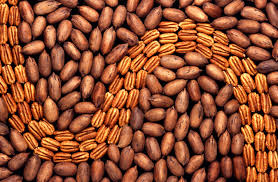 Eating about a handful of pecans each day may play a role in protecting the nervous system, according to a new animal study published in the current issue of Current Topics in Nutraceutical Research. The study, conducted at the Center for Cellular Neurobiology at the University of Massachusetts Lowell, suggests adding pecans to your diet may delay the progression of age-related motor neuron degeneration. This may include diseases like amyotropic lateral sclerosis (ALS), also known as Lou Gehrig’s Disease.
Mice provided a diet supplemented with pecans displayed a significant delay in decline in motor function compared to mice receiving no pecans. Mice eating the diet with the most pecans (0.05%) fared best. Both pecan groups fared significantly better than those whose diets contained no pecans. The result was based on how the mice performed in highly specific tests, each of which compared mice on the control diet with mice consuming pecan-enriched diets.
For more information on the health benefits of pecans, recipes, photos and much more, visit www.ilovepecans.org.
April 8, 2010
Cough Assist for ALS

Cough Assist
Studies have shown prolonged survival and a delayed need for tracheotomy by over a year with its use?
The CoughAssist noninvasively helps patients clear bronchial secretions when they can't cough for themselves. The CoughAssist is a safe, comfortable way to reduce the risk of airway damage and respiratory complications. Helps patients by enhancing or replacing their natural removal of bronchial secretions with the gradual application of positive pressure to the airway followed by a rapid shift to negative pressure. The slow inhale/rapid exhale airflow simulates the natural coughing process while avoiding the potential problems associated with more invasive procedures.Many physicians now recommend the Cough Assist or Exsufflator. This product is often ordered prior to or at the same time as the BIPAP. The Cough Assist is a prescription item that is covered by Medicare and Medicaid.
Find out more, ask questions and pass on the information;
http://www.coughassist.com/
http://www.alshopefoundation.com/resp.php
March 14, 2010
ALS......The Long Goodbye
Hard to watch...but harder to live with.
This is a family's journey with Lou Gehrig's Disease.
Through Life we learn Suffering precedes Death.
Through ALS we learn Suffering engages the Family.
This is a family's journey with Lou Gehrig's Disease.
Through Life we learn Suffering precedes Death.
Through ALS we learn Suffering engages the Family.
February 6, 2010
Because You Really Love that ALS Patient

Pamper yourself with a gentle, warm aerated stream. A convenient remote control allows you to personalize several functions including water temperature, pressure, and even offers a gentle cycling massage feature.
Follow cleansing with a touch of a button for an adjustable warm air-dry while enjoying the comfort of a gently heated seat. Both features include adjustable temperatures.
BB-1000 is equipped with state-of-the-art "smart power saving function" that calculates the most frequently used hours of the day for maximum savings with a powerful deodorizer that eliminates up to 90% of embarrassing odor.
Its patented 1 pocket 3 nozzles allow maximum hygiene with a soothing pulsating massage.
Equipped with the most advanced "Capacitance" seat sensor and "Self Diagnose," BB-1000 is truly the most advanced and complete bidet seat in the industry.
- Available in Round and Elongated. White or Biscuit.
- Convenient Remote Control
- Powerful deodorizer with carbon filter
- Patented 1 pocket 3 nozzle system
- Auto Smart Power Saving
- Extra protections on electronic parts
- Quality approved by UL CE TUV
- Heated Seat
- Warm Air Dry
- Built-in Filter
- Hydraulic Seat and Cover
- Safety Sensor
- Self-Diagnosis
- Wide Cleaning
- Massage Cleaning
- Quick Release for Easy Cleaning
- Gentle Aerated Water Stream
February 11, 2008
Pixie Dust for PALS
Lithium combined with Rilutek could slow ALS progression?
Another United States discovery, no this hot item comes from the Italians. I suppose any news is better than no news at all. Lithium has been circulated in the neruogolical fiields for about ten years and now it's the newest healer, well maybe for this week. Something is horribly wrong with research results verses dollars spent. If Rilutek was more effective we would not need this new Peter Pan theory using Pixie Dust to slow ALS progression. Seems to me this sort of distraction only keeps us in that revolving door spinning between Life and Breath. We need Uncle Sam to stop wasting tax dollars on agencies that take a disease and uses it to create weekly paychecks. How about creating one task force to work on one disease. Make them accountable for progress every quarter, no results, new team / new staff.
Like Lithium, ten years back we had another debacle that was called Myotrophin. Kyle Hahn led his fight against the FDA only to have Hope taken from him. Last week we saw the courage of Leo Green giving Hope to Lithium.
Today Kyle and Leo have been taken from us by ALS and the movie never ends, it goes on and on and on.

Another United States discovery, no this hot item comes from the Italians. I suppose any news is better than no news at all. Lithium has been circulated in the neruogolical fiields for about ten years and now it's the newest healer, well maybe for this week. Something is horribly wrong with research results verses dollars spent. If Rilutek was more effective we would not need this new Peter Pan theory using Pixie Dust to slow ALS progression. Seems to me this sort of distraction only keeps us in that revolving door spinning between Life and Breath. We need Uncle Sam to stop wasting tax dollars on agencies that take a disease and uses it to create weekly paychecks. How about creating one task force to work on one disease. Make them accountable for progress every quarter, no results, new team / new staff.
Like Lithium, ten years back we had another debacle that was called Myotrophin. Kyle Hahn led his fight against the FDA only to have Hope taken from him. Last week we saw the courage of Leo Green giving Hope to Lithium.
Today Kyle and Leo have been taken from us by ALS and the movie never ends, it goes on and on and on.
January 17, 2008
Lou Gehrig's Patients Get Their Bill Blocked

January 7, 2008 - by Donny Shaw - OpenCongress.org
The ALS Registry Act, S. 1382, has been frozen by Senate trickery. As a person coping with ALS my dream is to keep it on the front page. This century old disease deserves more than a whisper.
ALS, commonly known as Lou Gehrig's disease, is the most horrible disease in our modern times. ALS is the disease that takes a deadly toll on the body by a process of total muscle paralysis, which causes death in a very short time. While the amount of those being diagnosed is on the rise our numbers remain just low enough for science and the medical companies to turn and look away. ALS is the disease we like to whisper about. Reminds me of the homeless Veteran standing on the roadside with a cardboard sign that reads "Hungry, God Bless."
Senator Tom Coburn of Oklahoma is also a Doctor that thinks the Center for Disease Control collecting data on the variables of ALS is a waste of money. The ALS Registry Act was written and introduced four years ago. Endless hours by ALS Advocates and congressional time taken to approve and make sure it is acceptable has all been lost. The Senator found a way to kill the clock just before the other team won; Senate trickery called a "Hold."
Before adjourning for the year, Coburn vowed to put a hold on any bill that didn't meet a set of criteria that he outlined on his website. Apparently, this is one of the bills that didn't make the cut, but Coburn has not yet issued a specific explanation as to why. He's got a lot of explaining to do with this one -- it is co-sponsored by two-thirds of the Senate and the House of Representatives already passed their version of it by an overwhelming vote of 411-3.
The ALS Registry Act, S. 1382, has been frozen by Senate trickery. As a person coping with ALS my dream is to keep it on the front page. This century old disease deserves more than a whisper.
ALS, commonly known as Lou Gehrig's disease, is the most horrible disease in our modern times. ALS is the disease that takes a deadly toll on the body by a process of total muscle paralysis, which causes death in a very short time. While the amount of those being diagnosed is on the rise our numbers remain just low enough for science and the medical companies to turn and look away. ALS is the disease we like to whisper about. Reminds me of the homeless Veteran standing on the roadside with a cardboard sign that reads "Hungry, God Bless."
Senator Tom Coburn of Oklahoma is also a Doctor that thinks the Center for Disease Control collecting data on the variables of ALS is a waste of money. The ALS Registry Act was written and introduced four years ago. Endless hours by ALS Advocates and congressional time taken to approve and make sure it is acceptable has all been lost. The Senator found a way to kill the clock just before the other team won; Senate trickery called a "Hold."
Before adjourning for the year, Coburn vowed to put a hold on any bill that didn't meet a set of criteria that he outlined on his website. Apparently, this is one of the bills that didn't make the cut, but Coburn has not yet issued a specific explanation as to why. He's got a lot of explaining to do with this one -- it is co-sponsored by two-thirds of the Senate and the House of Representatives already passed their version of it by an overwhelming vote of 411-3.
January 6, 2008
Doctor, Senator, Deacon Kills ALS Progress
ALS commonly known as Lou Gehrig's disease is the most horrible disease in our modern times. ALS is the disease that takes a deadly toll on the body by a process of total muscle paralysis, which causes death in a very short time. While the amount of those being diagnosed is on the rise our numbers remain just low enough for science and the medical companies to turn and look away. ALS is the disease we like to whisper about. Reminds me of the homeless Veteran standing along the roadway with a cardboard sign that reads "Hungry, God Bless."
The person with the three identities is Senator Tom Coburn of Oklahoma. He is the Doctor that thinks the Center for Disease Control collecting data on the variables of ALS is a waste of money. The ALS Registry Act was written and introduced four years ago. Endless hours by ALS Advocates and congressional time taken to approve and make sure it is acceptable has all been lost. The Senator found a way to kill the clock just before the other team won; Senate trickery called a "Hold." No public explanation yet but our guess is the Doctor has more important items to deal with. Saving Lives and Money?
As a Deacon, you would think he might give testimony to Benevolence before he creates the false identity of a Fiscal Conservative. The ALS community is not asking for a handout, we just need to be counted. Simply connect the dots of this horrid century old disease, that's all.
The ALS Registry Act S.1382 is now on "Hold" frozen in the Senate and more ALS victims are left by the side of the road holding a cardboard sign that reads "Help, God Bless."
The person with the three identities is Senator Tom Coburn of Oklahoma. He is the Doctor that thinks the Center for Disease Control collecting data on the variables of ALS is a waste of money. The ALS Registry Act was written and introduced four years ago. Endless hours by ALS Advocates and congressional time taken to approve and make sure it is acceptable has all been lost. The Senator found a way to kill the clock just before the other team won; Senate trickery called a "Hold." No public explanation yet but our guess is the Doctor has more important items to deal with. Saving Lives and Money?
As a Deacon, you would think he might give testimony to Benevolence before he creates the false identity of a Fiscal Conservative. The ALS community is not asking for a handout, we just need to be counted. Simply connect the dots of this horrid century old disease, that's all.
The ALS Registry Act S.1382 is now on "Hold" frozen in the Senate and more ALS victims are left by the side of the road holding a cardboard sign that reads "Help, God Bless."
December 27, 2007
Grinch Holds Lou Gehrig (ALS) Patients Hostage
ALS patients nation wide are being held hostage this Christmas by a Grinch on Capitol Hill. His name is Tom Coburn, Senator from Oklahoma. The Wall Street Journal posted the front-page article on Dec. 21st and detailed how this Senator worked late while others adjourned for the Holidays. His scrooge style mission was to place a "hold" on selected bills, a procedural maneuver that allows a single senator to prevent a bill from being passed quickly without a roll-call vote or floor debate. The bill held hostage is the ALS Registry Act S.1382. This legislation would authorize the establishment of an ALS Registry at the Centers for Disease Control and Prevention. The House of Representatives passed the bill on Oct.16, 2007 by an overwhelming 411-3 vote. The Senate H.E.L.P. Committee favorably reported the Senate version of the bill on Nov. 14, 2007 and more than two-thirds of the Senate has cosponsored the bill. The ALS Registry Act is needed to build on projects underway at the CDC and supported by the Congress and the Administration.
This bill was drawn up and introduced by Congressman Elliot Engel, N.Y. in 2004. When this bill finally becomes law it may take the CDC two years to collect the first of its ALS data. My question for Senator Coburn would be to tell me how many ALS patients would die in this five-year period. If we had the ALS Registry Act we would know the facts and much more Senator.
This bill was drawn up and introduced by Congressman Elliot Engel, N.Y. in 2004. When this bill finally becomes law it may take the CDC two years to collect the first of its ALS data. My question for Senator Coburn would be to tell me how many ALS patients would die in this five-year period. If we had the ALS Registry Act we would know the facts and much more Senator.
Subscribe to:
Posts (Atom)